Psychedelics and Healing: Ancient Traditions, Modern Science, and How They Compare to the Rewind Technique
In recent years, psychedelic‑assisted therapy has moved from the margins of scientific research into mainstream conversation. People living with trauma, anxiety, or long‑standing emotional pain are increasingly curious about whether these substances could help them heal. At the same time, many feel overwhelmed by the hype, unsure about the risks, and uncertain about how psychedelics compare to gentler, established approaches such as the Rewind Technique.
To understand the role psychedelics might play in trauma recovery today, it helps to look both backward — to the Indigenous traditions of Central America — and forward, to the emerging scientific evidence. This article offers a grounded, culturally respectful, and trauma‑informed exploration of psychedelics, their benefits and limitations, and how they differ from the Rewind Technique.
Indigenous Central American Traditions: Psychedelics as Sacred Teachers
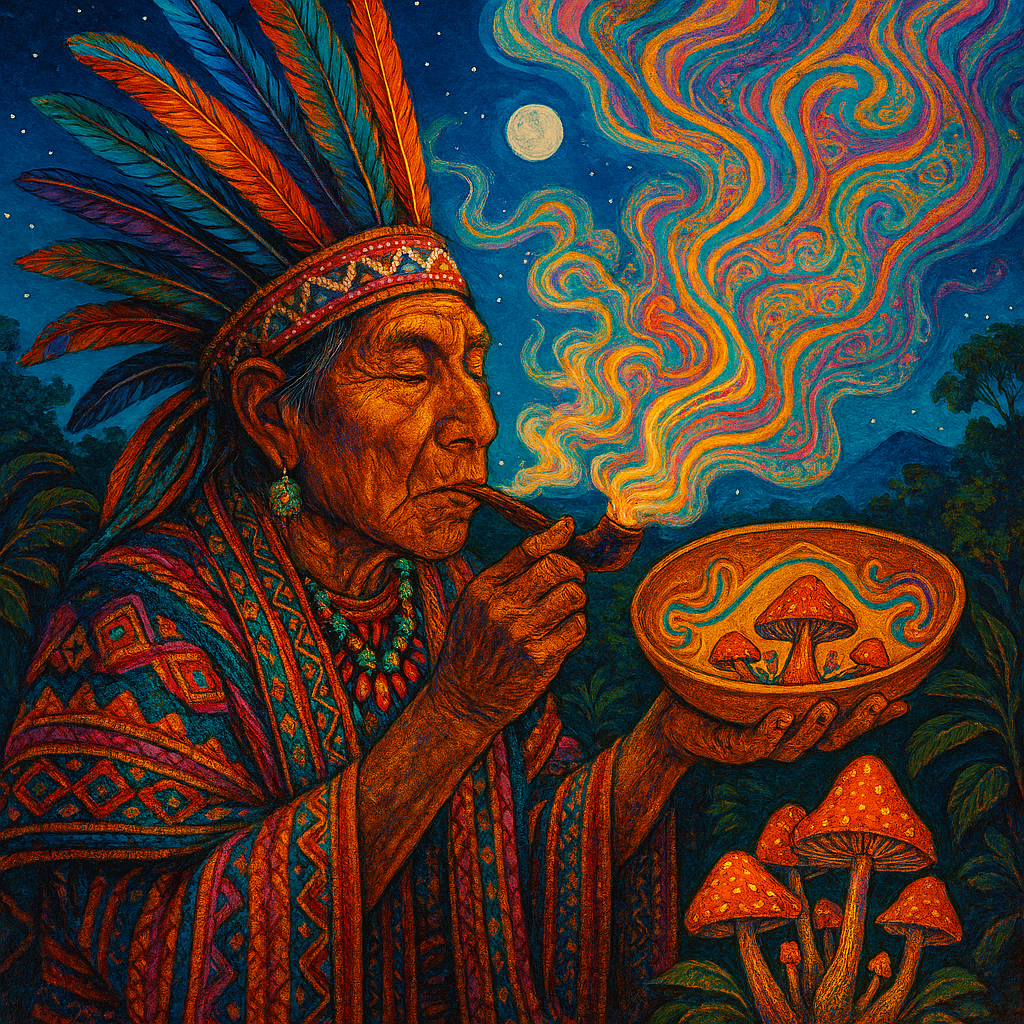
Long before Western science began studying psychedelics, Indigenous peoples across Central America and southern Mexico had developed sophisticated, spiritually rich healing traditions involving psychoactive plants. For the Maya, Mazatec, Mixe, and other groups, these plants were not “drugs” — they were teachers, guides, and bridges between the physical and spiritual worlds.
Sacred plants used in healing
Some of the most significant include:
- Psilocybin mushrooms (teonanácatl, “flesh of the gods”)
- Morning glory seeds containing LSA (ololiuqui)
- Salvia divinorum, used for divination and healing
- Cacao, used ceremonially (not psychedelic but psychoactive and spiritually important)
These plants were used to:
- diagnose illness
- resolve emotional or relational disharmony
- communicate with ancestors
- guide rites of passage
- restore balance when someone was spiritually or emotionally “out of harmony”
Healing was not an individual, private act. It was communal, relational, and deeply embedded in ritual.
A Mazatec example: The velada
In Mazatec tradition, a person suffering from emotional distress might participate in a velada — a night‑long healing ceremony guided by a curandera. The mushrooms were taken in darkness, accompanied by chanting that helped guide the person inward. The curandera interpreted visions, offered grounding, and helped the person confront unresolved pain.
The experience was not meant to overwhelm. It was meant to be held.
This is a crucial difference from many modern, unregulated psychedelic experiences, where the container — the ritual, the guidance, the community — is missing.
Today, many Indigenous healers express concern that Western psychedelic enthusiasm risks:
- stripping these plants of their cultural meaning
- commercialising sacred traditions
- ignoring the relational and spiritual context that makes them safe
This historical perspective reminds us that psychedelics are not inherently healing. The context matters.
What Modern Science Says About Psychedelics and Trauma
Over the past two decades, scientific interest in psychedelics has surged. Researchers are exploring whether substances like psilocybin, MDMA, and ketamine can help people process trauma in new ways.
Key findings from modern research
MDMA‑assisted therapy for PTSD
A landmark phase 3 trial (Mitchell et al., Nature Medicine, 2021) found that MDMA‑assisted therapy significantly reduced PTSD symptoms, with many participants no longer meeting diagnostic criteria after treatment.
Psilocybin for depression
A major study published in The New England Journal of Medicine (Carhart‑Harris et al., 2022) found that psilocybin produced rapid and sustained reductions in depressive symptoms in people with treatment‑resistant depression.
Ketamine for depression
Ketamine has shown rapid antidepressant effects, though they may be short‑lived without integration therapy (Wilkinson et al., American Journal of Psychiatry, 2018).
Why psychedelics may help
Research suggests psychedelics can:
- increase neuroplasticity
- reduce rigid patterns of thought
- soften emotional defences
- enhance psychological flexibility
- allow traumatic memories to be revisited with less avoidance
These mechanisms echo what Indigenous healers have known for centuries: healing often requires connection, openness, and support.
Case Study: A Positive Outcome
A woman in her 40s with long‑standing childhood trauma participated in a regulated MDMA‑assisted therapy programme. With two trained therapists present, she revisited a traumatic memory without shutting down. Over the following weeks, she reported:
- fewer nightmares
- improved emotional regulation
- reduced hypervigilance
- a renewed sense of connection
Six months later, her symptoms remained significantly reduced.
This reflects what clinical trials aim for: deep processing within a safe therapeutic container.
The Real Risks and Limitations
Psychedelics are powerful. They can open emotional doors — but they can also open them too quickly.
1. Emotional overwhelm
Some people experience panic, dissociation, or retraumatisation.
2. Unpredictability
Responses vary widely, even in controlled settings.
3. Vulnerability to suggestion
People in psychedelic states are more impressionable, which requires highly ethical, well‑trained therapists.
4. Worsening symptoms
Some experience increased anxiety or intrusive memories afterwards.
5. Legal and safety concerns
Outside regulated clinical trials, psychedelic use often occurs in unregulated environments.
Case Study: A Problematic Outcome
A client of mine, 29 years old, attended an unregulated psilocybin retreat hoping for a breakthrough. Without proper screening or support, he became overwhelmed by fear and dissociation. Afterwards, he struggled with:
- intensified anxiety
- intrusive memories
- difficulty grounding
- Most importantly, he developed a Catastrophic bowel‑related fear. The fear of losing bowel control conditioned his life with serious consequences.
He eventually sought stabilising therapy to recover.
This illustrates a crucial truth: psychedelics are not inherently healing. The container matters as much as the substance.
How Psychedelics Compare to the Rewind Technique
In recent years, both psychedelic-assisted therapy and the Rewind Technique have attracted growing interest as innovative approaches to healing trauma. While they may appear to share a similar promise — rapid and transformative change — they are fundamentally different in how they work, how they are delivered, and what they require from the client.
⚖️ Key differences at a glance
| Aspect | Psychedelic Therapy | Rewind Technique |
|---|---|---|
| Approach | Altered states of consciousness | Guided imagery |
| Experience | Often intense, immersive | Calm, controlled |
| Verbal disclosure | May vary | Not required |
| Speed of results | Often rapid | Often rapid |
| Evidence base | Growing, stronger for some conditions (e.g. depression, PTSD) | Emerging, |
| Risks | Psychological distress, suitability concerns | Low when used appropriately |
| Accessibility | Limited, regulated settings | Widely accessible in therapy |
🌱 Two philosophies of healing
At a deeper level, these approaches reflect two different philosophies:
- Psychedelic therapy works by expanding consciousness — opening new emotional and perceptual landscapes
- The Rewind Technique works by calming and reorganising existing memory pathways
One is often experienced as a peak or breakthrough experience
The other as a gentle unwinding
Key differences
Emotional activation
- Psychedelics: Often intense and immersive
- Rewind: Calm, contained, and emotionally safe
Safety
- Psychedelics: Can be unpredictable
- Rewind: Predictable and gentle
Accessibility
- Psychedelics: Legally restricted, expensive, and require medical oversight
- Rewind: Available in a standard therapy session
Mechanism
- Psychedelics: Increase neuroplasticity and emotional openness
- Rewind: Helps the brain re‑file traumatic memories so they no longer trigger fight‑or‑flight responses.
Suitability
- Psychedelics: May help when other treatments haven’t worked
- Rewind: Suitable for many people seeking a non‑pharmacological, gentle approach
A Final Reflection: Choosing Your Path
Indigenous Central American traditions remind us that healing is not just about reducing symptoms. It is about restoring connection — to ourselves, to others, and to something larger than us. Modern psychedelic therapy is rediscovering this truth, but it is still evolving, still imperfect, and still learning from the wisdom of the cultures that carried these practices long before Western science took interest.
The Rewind Technique offers a different path — one that is grounded, gentle, and accessible, especially for those who prefer a calm, non‑altered approach to trauma healing.
Rather than seeing these approaches as competing, it may be more helpful to view them as complementary options within an evolving field of trauma therapy.
- Psychedelic therapies may be particularly helpful where deep emotional access or meaning-making is needed
- The Rewind Technique may be ideal for those seeking effective change without emotional intensity
Both point toward a shared insight:
Healing trauma does not necessarily require prolonged suffering — and the future of therapy may lie in approaches that are not only effective, but also deeply respectful of the person’s nervous system.
Both paths have value. What matters most is choosing the one that aligns with your needs, your readiness, and your sense of safety.
References:
Breeksema, J. J., et al. (2022).
Adverse events in psychedelic treatments: Systematic review.
Journal of Psychopharmacology
BMJ State-of-the-art review (2026):
Psychedelic medicine: mechanisms and translation to practice.
Thomas, J. E., et al. (2026).
Efficacy and risks of psychedelics in PTSD: Systematic review.
Watford, T., & Masood, N. (2023).
Psilocybin as a treatment for major depressive disorder: A systematic review.
Clinical Psychopharmacology and Neuroscience.



Maria da Silva
Maria da Silva (PhD, DHP Acc Hyp) is a Cognitive Behavioural Hypnotherapist and a Trauma/Attachment Informed Coach, an expert in helping people understand and overcome their past conditioning and engage in meaningful and peaceful relationships through Nonviolent Communication.


