Antidepressants – Just One Piece of the Puzzle
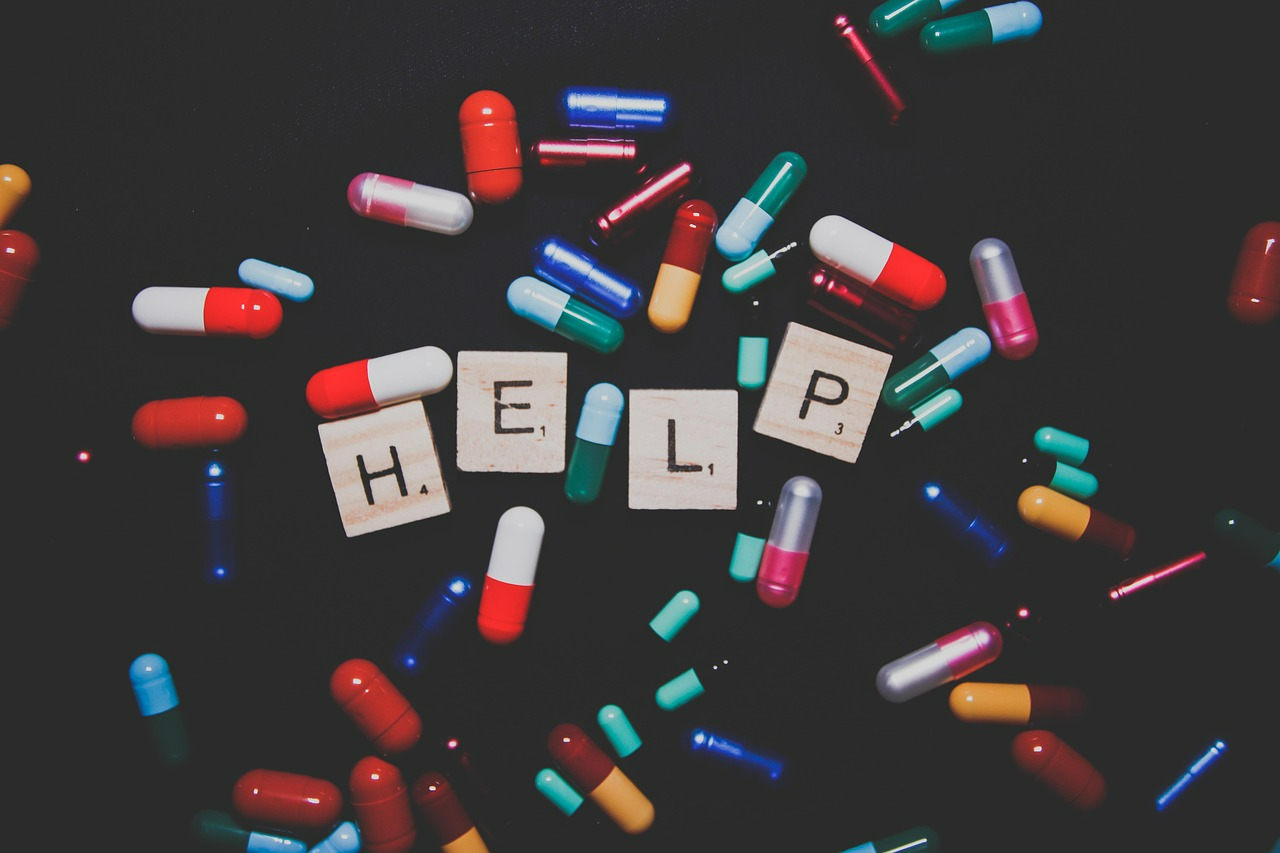
Let’s talk about antidepressants.
Not in a dry, clinical way—but in the way real people experience them. Because behind every prescription is someone sitting quietly thinking:
“Will this actually help me… or am I just hoping it will?”
I hear this question a lot in my work. And the honest answer is:
👉 Antidepressants can help—but they are not the whole story.
💊 What the Science Says (and What People Feel)
Research does show that antidepressants can be effective. A large meta‑analysis of over 500 clinical trials and more than 100,000 patients found that antidepressants perform better than placebo in treating depression, particularly in more severe cases. [thelancet.com]
That’s important.
But it’s also true that the same research highlights limitations, including study bias and modest effect sizes—meaning the improvement, while real, is often not dramatic. [bmj.com]
In everyday terms?
They can help—but they’re rarely a magic fix.
A client once described it like this:
“I didn’t suddenly feel happy… but I didn’t feel like I was sinking anymore.”
That “not sinking” can be life-changing. But it’s not the whole journey.
🛟 When Medication Really Helps
For many people, antidepressants provide something essential: breathing space.
They can:
- Reduce overwhelming sadness
- Ease anxiety
- Improve sleep
- Make daily life feel slightly more manageable
Another client said:
“It didn’t fix my life. But it gave me enough stability to start fixing things myself.”
That’s often where medication is most helpful—not as a solution, but as a platform for recovery.
🤔 But Here’s the Catch
Medication works on brain chemistry.
But life isn’t just chemistry.
If someone keeps:
- Putting themselves last
- Avoiding difficult conversations
- Repeating painful relationship patterns
- Carrying unresolved emotional wounds
…those patterns don’t disappear with a tablet.
Research increasingly reflects this complexity. Studies show that while medication can reduce symptoms, it doesn’t address underlying psychological processes or life context. [thelancet.com]
Or, to put it simply:
👉 You can feel better—but still be stuck in the same patterns.
😶 The “I Feel Fine… But Not Quite Me” Experience
One of the most surprising things for many people is something called emotional blunting.
Research suggests that 40–60% of people taking SSRIs experience some degree of this effect. [cam.ac.uk], [medicalnewstoday.com]
It can feel like:
- You’re less anxious… but also less joyful
- You don’t feel pain as strongly… but you also don’t feel excitement
- Life feels… flatter
One client joked:
“I stopped crying at sad films—which sounded great—but then I stopped laughing at the funny ones too.”
Funny, but also very real.
Scientists believe this may be linked to how these medications affect reward processing and emotional learning in the brain. [cam.ac.uk]
⏳ The Long-Term Questions
Another important piece: we still don’t fully understand the long-term effects of antidepressants.
Large UK-based studies have found associations between long-term use and increased risks of conditions like heart disease and mortality, although causation is still debated. [cambridge.org], [bristol.ac.uk]
At the same time, use has grown significantly. In England alone, around 8.9 million people were prescribed antidepressants in 2024–2025. [nhsbsa.nhs.uk]
So this isn’t a small conversation—it’s a societal one.
🧠 Therapy: Where Real Change Happens
Now let’s talk about therapy.
Because this is where something deeper begins to shift.
Research shows that psychotherapy is about as effective as antidepressants in the short term, but it has a crucial advantage:
👉 Its effects tend to last longer.
A meta-analysis found that psychotherapy is often superior to medication in preventing relapse after treatment ends. [frontiersin.org]
Why?
Because therapy helps you:
- Understand your patterns
- Work through emotional experiences
- Build new ways of thinking and relating
One client said:
“The medication helped me cope. Therapy helped me understand myself.”
That understanding changes everything.
🚶♀️ Movement: The Most Underrated Treatment
Now for something that sounds almost too simple: movement.
And yet, research shows it’s powerful.
A large review of nearly 1,000 trials found that exercise can be as effective—or even more effective—than medication and therapy for mild to moderate depression. [medicalnewstoday.com]
Yes, really.
And it doesn’t have to mean running marathons.
It can be:
- A 15-minute walk
- Gardening
- Gentle yoga
- Dancing around your kitchen (strongly recommended)
One client told me:
“I argued with myself for 30 minutes about going for a walk… then went—and felt 10% better.”
That 10% matters.
Because recovery is often built from small shifts, repeated consistently.
🤝 Connection: The Piece We Often Forget
Here’s something no medication can replace:
👉 Human connection
Loneliness, disconnection, and lack of meaningful relationships are strongly linked to depression.
And yet, they often go unaddressed.
Connection might look like:
- Talking honestly to someone you trust
- Feeling understood in therapy
- Laughing with a friend
- Even small moments of warmth with others
One client said:
“I thought something was wrong with me—but actually, I was just very alone.”
That’s a powerful realisation.
⚖️ So… What Works Best?
Research increasingly supports a combined approach.
Studies show that combining therapy and medication is often more effective than medication alone, particularly for long-term outcomes. [frontiersin.org]
And when you add movement and social connection?
You’re supporting:
- The brain
- The mind
- The body
- And your relationships
In other words:
👉 You’re supporting the whole person.
🌸 A Final Thought
If you’re currently struggling, please know:
You are not broken.
You are not weak.
You are human—responding to life, stress, and experience.
And with the right support, things can begin to shift.
If you’re navigating the decision about antidepressants, here’s what I want you to know:
- Antidepressants can be helpful, but they are not the full solution
- Therapy, movement, and connection are not “extras”—they are fundamental
And perhaps most importantly:
“You don’t just need something to change how you feel—you need space to understand why you feel the way you do.”
Because that’s where real, lasting change begins.
References
- Nature Reviews Psychiatry: SSRI mechanisms [bmj.com]
- International Journal of Molecular Sciences (2025): Emerging antidepressant mechanisms [jamanetwork.com]
- The Lancet (2025): Effectiveness and controversies of SSRIs [pmc.ncbi.nlm.nih.gov]
- Mayo Clinic (2025): SNRIs overview [cambridge.org]
- NHS Business Services Authority (2025): UK prescribing statistics [tandfonline.com]
- University of Southampton (2024): Long-term antidepressant use in the UK [medicinenet.com]
- BMJ (2024): Exercise and depression meta-analysis [thelancet.com]
- Cochrane Review (2026): Exercise vs therapy and medication [youtube.com]
- Psychological Medicine (2024): Psychotherapy vs antidepressants [youtube.com]
- Frontiers in Psychiatry (2024): Long-term outcomes of psychotherapy vs medication [pmc.ncbi.nlm.nih.gov]
- World Psychiatry meta-analysis: Combined treatment efficacy [youtube.com]




Maria da Silva
Maria da Silva (PhD, DHP Acc Hyp) is a Cognitive Behavioural Hypnotherapist and a Trauma/Attachment Informed Coach, an expert in helping people understand and overcome their past conditioning and engage in meaningful and peaceful relationships through Nonviolent Communication.


