-
Procrastination – Why You Avoid What You Need to Do, And Chase What Feels Pleasant
We call it procrastination, to the fact that all of us can spend half an hour scrolling on our phone without hesitation, yet the moment we think about doing something important—sending that email, filling out that form, ironing, cleaning — we suddenly feel heavy, tired, or mysteriously “busy”! Do you wonder why the things you need to do feel like uphill work, while the things you want to do feel effortless? If so, you’re not alone. In fact, you’re human. Let’s talk about what’s really happening inside you when you avoid necessary tasks and gravitate toward pleasant ones—and how you can shift that pattern. Procrastination Isn’t Laziness. It’s Protective. Do…
-
Nonviolent Communication – authenticity and empathy
In a world filled with noise, conflict, and misunderstanding, the way we communicate matters more than ever. Whether in our personal relationships, workplaces, or communities, the words we choose—and the intent behind them—can either build bridges or create barriers. Nonviolent Communication (NVC) is a transformative approach to dialogue that fosters empathy, clarity, and connection. Developed by psychologist Marshall Rosenberg in the 1960s, NVC is more than a communication technique—it’s a mindset shift. It invites us to speak from the heart, listen deeply, and engage with others in ways that honor both our needs and theirs. This workshop is designed for anyone seeking to improve their relationships, resolve conflicts peacefully, and…
-
Hormones, mood and identity – “Who am I?”
Many women describe a monthly emotional pattern that feels like a betrayal by their own bodies. One week they feel grounded, capable, connected, and emotionally stable — and the next they feel overwhelmed, irritable, hopeless, or even suicidal. In therapy rooms across the world, women say things like: These experiences are not imaginary, dramatic, or “just hormones.” They are neurobiological events driven by predictable hormonal shifts that affect the brain, mood, stress response, and emotional regulation. Understanding what happens in the female body across the menstrual cycle is not only validating — it gives women tools to protect their mental health and communicate more clearly with partners. This article explains:…
-
Antidepressants – Just One Piece of the Puzzle
Let’s talk about antidepressants. Not in a dry, clinical way—but in the way real people experience them. Because behind every prescription is someone sitting quietly thinking: “Will this actually help me… or am I just hoping it will?” I hear this question a lot in my work. And the honest answer is: 👉 Antidepressants can help—but they are not the whole story. 💊 What the Science Says (and What People Feel) Research does show that antidepressants can be effective. A large meta‑analysis of over 500 clinical trials and more than 100,000 patients found that antidepressants perform better than placebo in treating depression, particularly in more severe cases. [thelancet.com] That’s important.…
-
Psychedelics and Healing: Ancient Traditions, Modern Science, and How They Compare to the Rewind Technique
In recent years, psychedelic‑assisted therapy has moved from the margins of scientific research into mainstream conversation. People living with trauma, anxiety, or long‑standing emotional pain are increasingly curious about whether these substances could help them heal. At the same time, many feel overwhelmed by the hype, unsure about the risks, and uncertain about how psychedelics compare to gentler, established approaches such as the Rewind Technique. To understand the role psychedelics might play in trauma recovery today, it helps to look both backward — to the Indigenous traditions of Central America — and forward, to the emerging scientific evidence. This article offers a grounded, culturally respectful, and trauma‑informed exploration of psychedelics,…
-
The Devastating Estrangement of Entitled Adult Children
“The story: The Silence Between Them” Margaret sat by the window, her hands wrapped around a lukewarm cup of tea. The autumn leaves outside danced in the wind, but her heart felt still and heavy. It had been nearly two years since she’d heard from her daughter, Claire. This estrangement led to profund depression and guilt. Claire had always been spirited—bright, ambitious, and outspoken. Margaret and her late husband had done everything to support her: private school, university abroad, help with her first flat, and later, childcare when Claire had her own children. They’d never said no, even when it meant dipping into their retirement savings. But things changed after…
-
Recovering from addiction: From the Bottom of the Bottle to the Top of the Hill
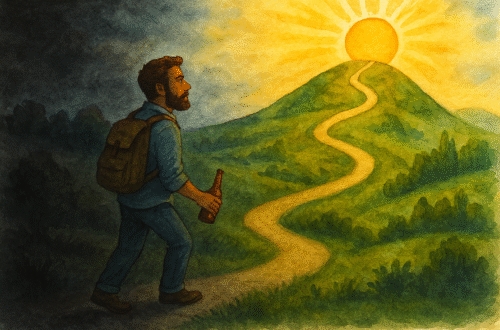
James’s Journey Out of Alcohol Addiction James was 42 when he first admitted to himself that something was wrong. He had always been the life of the party, the one with a drink in hand and a joke on his lips. But lately, the laughter felt hollow, and the drinks came earlier in the day. He missed meetings, forgot birthdays, and his teenage daughter had stopped talking to him. One morning, staring at his bloodshot eyes in the mirror, he whispered, “I think I have a problem.” That moment was James’s first step into the pre-contemplation stage shifting into contemplation. He began noticing how often he drank alone, especially when…
-
Breaking Free from Alcohol
Alcohol consumption is one of the most socially accepted habits in modern society, yet it’s also one of the most misunderstood. For many, drinking starts as a casual indulgence and gradually becomes a routine—one that’s hard to break. But what if the urge to drink isn’t truly an addiction, but a subconscious habit? And what if you could reprogram that habit using the power of your mind? The Emotional Roots of Drinking Alcohol is often used as an emotional anaesthetic. People drink not just for pleasure, but to numb pain, escape stress, or cope with unresolved trauma. In therapy, it’s common to find that excessive drinking is linked to emotional…
-
Trauma Therapy: A Gentle Revolution
A Quiet Night, A Loud Memory Dan hadn’t slept through the night in years. Every time he closed his eyes, the same scene played out: flashing lights, shattered glass, the sound of sirens. It had been over a decade since the accident, but his mind replayed it like a film stuck on loop. Therapy had helped a little, but the memories still felt raw—too vivid, too loud. Then, one afternoon, his new therapist introduced something different. No retelling. No reliving. Just a quiet space, a relaxed breath, and a guided visualization. Sophie imagined watching the memory like a movie on a screen. Then she rewound it—again and again—until the emotional…
-
In person or online therapy?
Discover the pros and cons of online therapy vs in-person therapy, and find out which format fits your lifestyle, comfort, and mental health needs best. Let’s face it—life can be a bit of a mess sometimes. Whether you’re dealing with anxiety, depression, relationship woes, or just the existential dread of choosing what to watch on Netflix, therapy can be a game-changer. But in today’s world, you’ve got options: do you go old-school and sit on a therapist’s couch, or do you log in from your own couch (possibly in pajamas, with a cat on your lap)? Let’s break down the advantages and disadvantages of both online and in-person therapy, with…