Recovering from addiction: From the Bottom of the Bottle to the Top of the Hill
James’s Journey Out of Alcohol Addiction
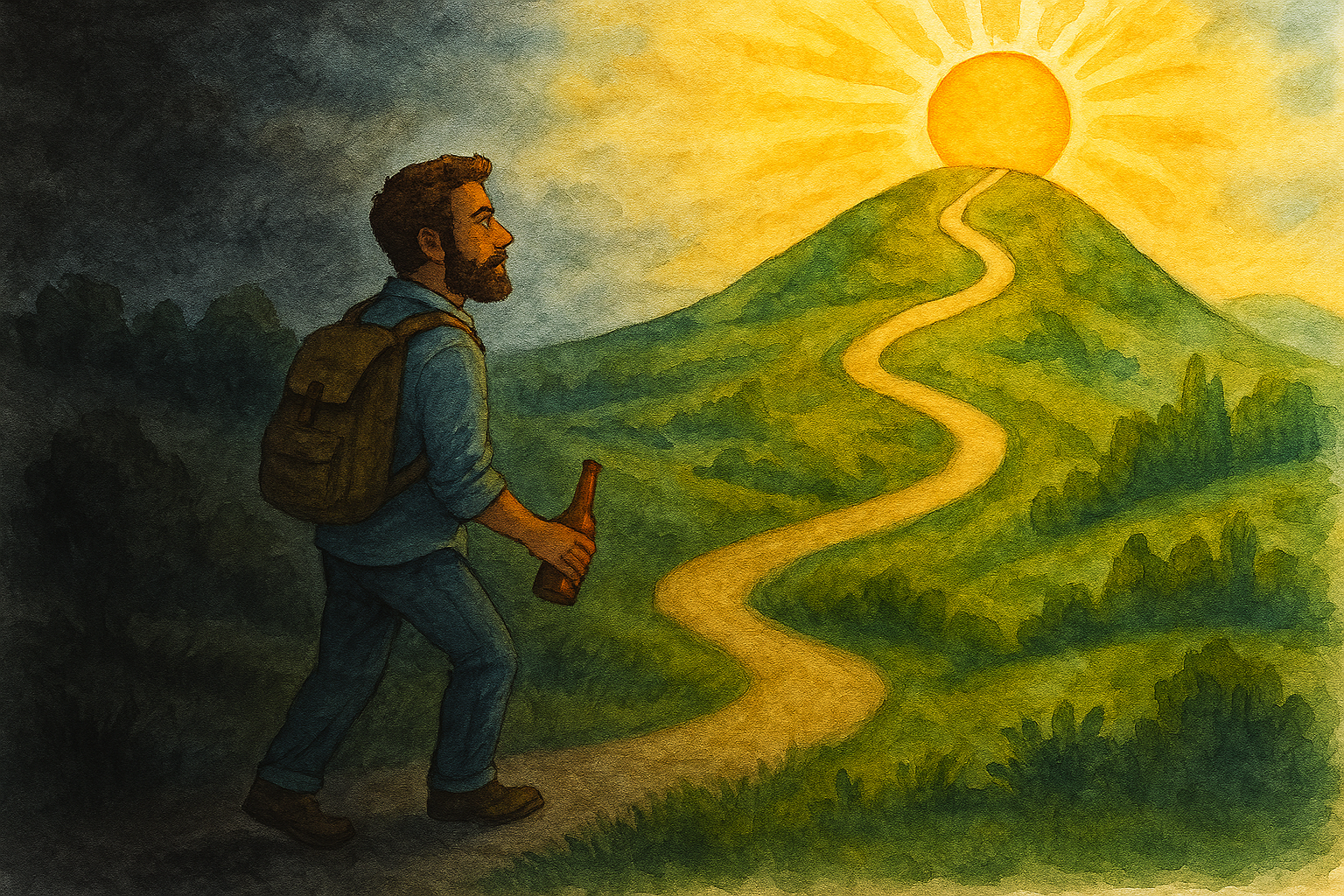
James was 42 when he first admitted to himself that something was wrong. He had always been the life of the party, the one with a drink in hand and a joke on his lips. But lately, the laughter felt hollow, and the drinks came earlier in the day. He missed meetings, forgot birthdays, and his teenage daughter had stopped talking to him. One morning, staring at his bloodshot eyes in the mirror, he whispered, “I think I have a problem.”
That moment was James’s first step into the pre-contemplation stage shifting into contemplation. He began noticing how often he drank alone, especially when angry or sad. He remembered promising himself he wouldn’t drink that day—and then doing it anyway. The hangovers were worse, and his work performance was slipping. He ticked off every box in a self-assessment list he found online. It was clear: he was addicted.
James started journaling. He realised alcohol had become his escape from stress, loneliness, and a deep sense of failure. He had unmet emotional needs—connection, purpose, and self-worth. Drinking gave him the illusion of control and confidence, but it was a counterfeit solution. He wasn’t meeting his needs; he was numbing them.
After a particularly bad weekend, James searched for help. He tried a few support groups but felt overwhelmed by the disease model that labelled him “powerless.” He wanted something that made sense to him—something that didn’t make him feel broken.
A friend recommended a particular therapist. In their first session, James was surprised. Instead of focusing on the alcohol, the therapist asked about his life, his needs, and his strengths. They talked about unmet emotional needs—security, attention, autonomy, intimacy, meaning—and how addiction was a misguided attempt to meet them.
James felt seen. He wasn’t just an addict; he was a man trying to cope. He decided to commit to the process. He entered the determination stage. “Something’s got to change,” he said. “I can’t go on like this.”
Together, they explored the discrepancy between his drinking and his goals. James wanted to rebuild his relationship with his daughter, feel proud of his work, and enjoy life without needing a drink. Alcohol was sabotaging all of that.
James set a goal: no more than 14 units of alcohol per week, with alcohol-free days. Eventually, he decided to stop completely. He entered the action stage. He wrote down his reasons, kept a drink diary, and removed alcohol from his home.
He learned to identify his triggers: stress at work, loneliness at night, and social pressure. He noticed that negative emotions—not cravings—were his biggest risk. He practiced “stop, look, and listen” when he felt tempted.
James made a plan. He avoided bars, declined invites to drinking-heavy events, and practiced saying “no” politely. He stayed active—joining a walking group, taking up photography, and reconnecting with old friends. He asked his family for support and kept his therapist updated.
Step-by-Step Fulfilment of Innate Needs
James began fulfilling his innate emotional needs, step by step:
- Security: He created a stable routine and safe home environment.
- Attention: He gave and received attention through volunteering.
- Autonomy: He made conscious choices about his time and habits.
- Connection: He rebuilt trust with his daughter and deepened friendships.
- Community: He joined a local men’s group.
- Intimacy: He opened up emotionally to those close to him.
- Privacy: He journaled and reflected daily.
- Status: He earned respect at work again.
- Competence: He completed a photography course.
- Meaning: He found purpose in helping others and creating art.
James knew relapse was possible. He prepared for it. When he felt tempted, he paused, stayed calm, and reminded himself of his progress. He had a support network and a plan. He didn’t see relapse as failure—just a signal to adjust.
James’s story is one of transformation. He didn’t just quit drinking—he rebuilt his life. The Human Givens approach helped him understand addiction not as a disease, but as a misdirected attempt to meet real human needs. By addressing those needs directly, James found freedom—not just from alcohol, but from the pain that led him there.
Recognising and Treating Addiction: A Human Givens Perspective
Addiction is a complex and often misunderstood phenomenon. The Human Givens approach offers a refreshing and holistic view, moving beyond the traditional disease model to explore addiction as a learned behaviour that can be unlearned. This blog post highlights the key signs of addiction and outlines effective treatment strategies based on the Human Givens framework.
Understanding Addiction: More Than a Disease
Contrary to the belief that addiction is purely a biological disease, the Human Givens model sees it as a maladaptive coping mechanism. Addiction often arises when individuals attempt to meet unmet emotional needs through substances or behaviours that offer temporary relief but ultimately deepen distress.
Addiction hijacks the brain’s natural motivation circuitry, creating powerful expectations around substances or behaviours. These expectations drive compulsive use, not just the chemical properties of the substance itself.
Signs of Addiction: What to Look For
Here we outline several diagnostic criteria for substance dependence, adapted from the DSM. These signs apply broadly to both legal and illegal substances and behavioural addictions:
- Preoccupation with the substance – Excessive time spent obtaining, using, or recovering from the effects.
- Unintentional overuse – Consuming more than intended, often repeatedly.
- Tolerance – Needing increasing amounts to achieve the same effect.
- Withdrawal symptoms – Physical or psychological distress when not using.
- Using to relieve withdrawal – Taking the substance to avoid discomfort.
- Persistent desire to quit – Repeated attempts to stop, often followed by relapse.
- Impaired performance – Social, occupational, or recreational activities suffer.
- Abandoning responsibilities – Giving up important roles or relationships.
- Continued use despite harm – Ignoring serious health or social consequences.
These signs are not limited to illegal drugs. Legal substances like alcohol, caffeine, and tobacco are widely used and can be just as addictive. Alarmingly, alcohol dependence affects 7.5% of men and 2.1% of women in the UK, with rising rates among young people.
Behavioural Signs in Young People
Early detection is crucial. Ten warning signs of drug use in adolescents include:
- Sudden mood swings
- Loss of interest in hobbies
- New social circles
- Poor hygiene
- Use of scents to mask drug smells
- Sores or rashes
- Unexplained spending
- Declining school performance
- Fatigue
- Loss of appetite
These signs often precede full-blown addiction and can be linked to underlying emotional distress or lack of life opportunities.
The Illusion of Needs Being Met
Addiction often masquerades as a solution to unmet emotional needs. For example:
- Illusion: “Take this drug and you’ll feel in control.”
- Reality: The drug reduces genuine control over life.
- Illusion: “Alcohol gives you confidence.”
- Reality: It undermines self-esteem and creates dependency.
- Illusion: “Shared drug use builds relationships.”
- Reality: Relationships are often superficial and transactional.
These illusions trap individuals in a cycle of temporary relief and long-term harm.
Treatment: A Holistic, Human-Centred Approach
The Human Givens model integrates biological, psychological, and social elements. It emphasises restoring emotional balance and meeting innate human needs through healthier means.
Stages of Change (Prochaska & DiClemente Model)
- Pre-contemplation – No recognition of a problem.
- Contemplation – Ambivalence about change.
- Determination – Commitment to change.
- Action – Implementing strategies.
- Maintenance – Sustaining progress.
- Relapse – Common but manageable; not a failure.
This model recognises that change is a process, not a single event.
Relapse Prevention
Relapse is common, especially in the first month of recovery. The Human Givens approach recommends:
- Stop, look, and listen – Pause and reflect.
- Stay calm – Avoid guilt and panic.
- Review commitment – Reaffirm goals.
- Make a new plan – Adjust and move forward.
- Seek support – Reach out to trusted people.
- Analyse the relapse – Learn from the experience.
Interestingly, most relapses are triggered by negative emotions or interpersonal conflict—not cravings.
Final Thoughts: Recovery Is Possible
Addiction is not a life sentence. With the right support, self-awareness, and strategies, recovery is achievable—even for those with severe dependency. The Human Givens approach offers hope by focusing on unmet needs, emotional health, and practical tools for change.
As Dr. S. Schachter noted,
“People can and do cure themselves of smoking, obesity and heroin addiction… in many cases apparently permanently.”
Looking for help?




Maria da Silva
Maria da Silva (PhD, DHP Acc Hyp) is a Cognitive Behavioural Hypnotherapist and a Trauma/Attachment Informed Coach, an expert in helping people understand and overcome their past conditioning and engage in meaningful and peaceful relationships through Nonviolent Communication.